
Welcome to the Bivalves subsite on Invertebrate Paleontology!
Please enter a genera name to retrieve more information.
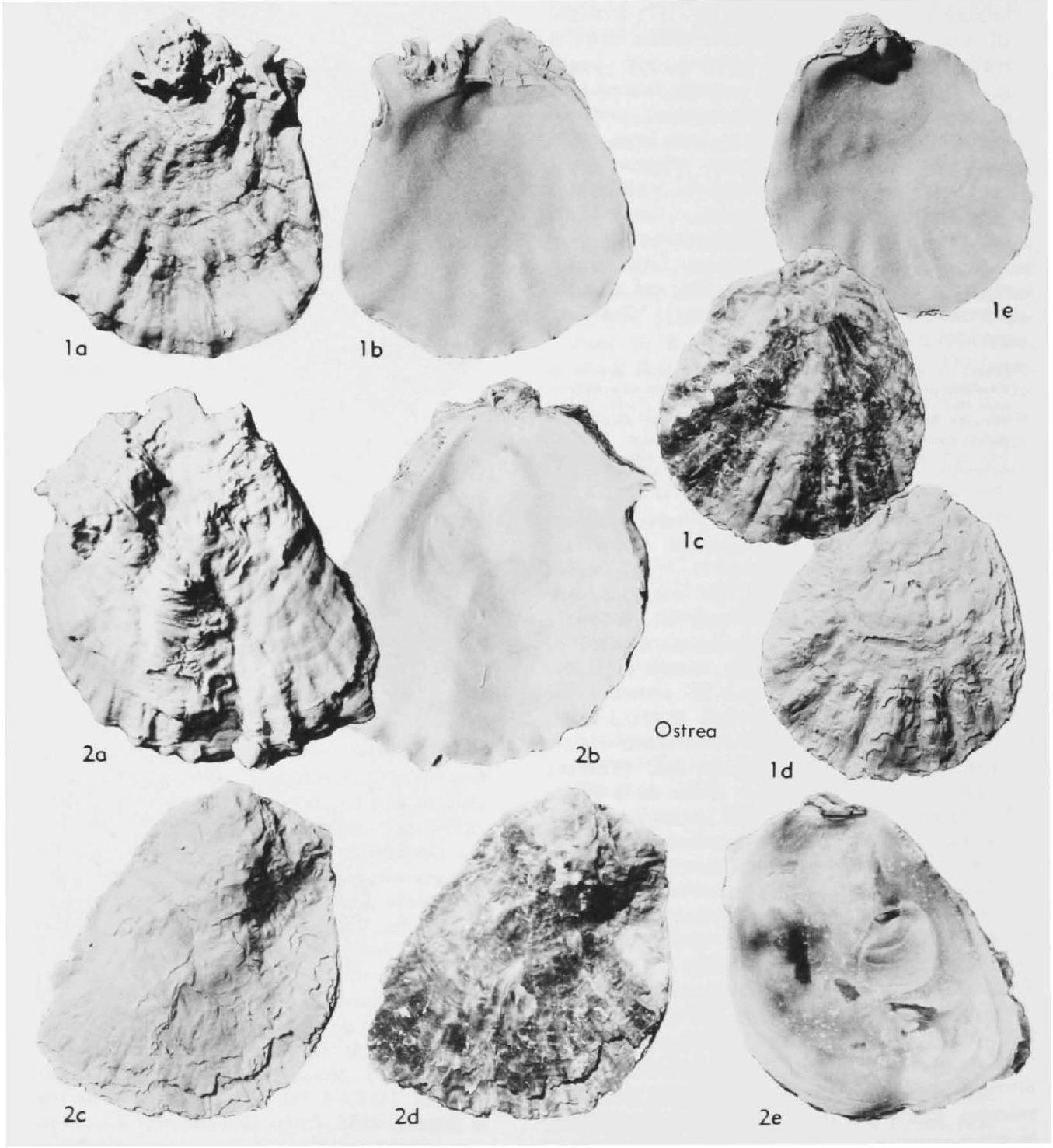
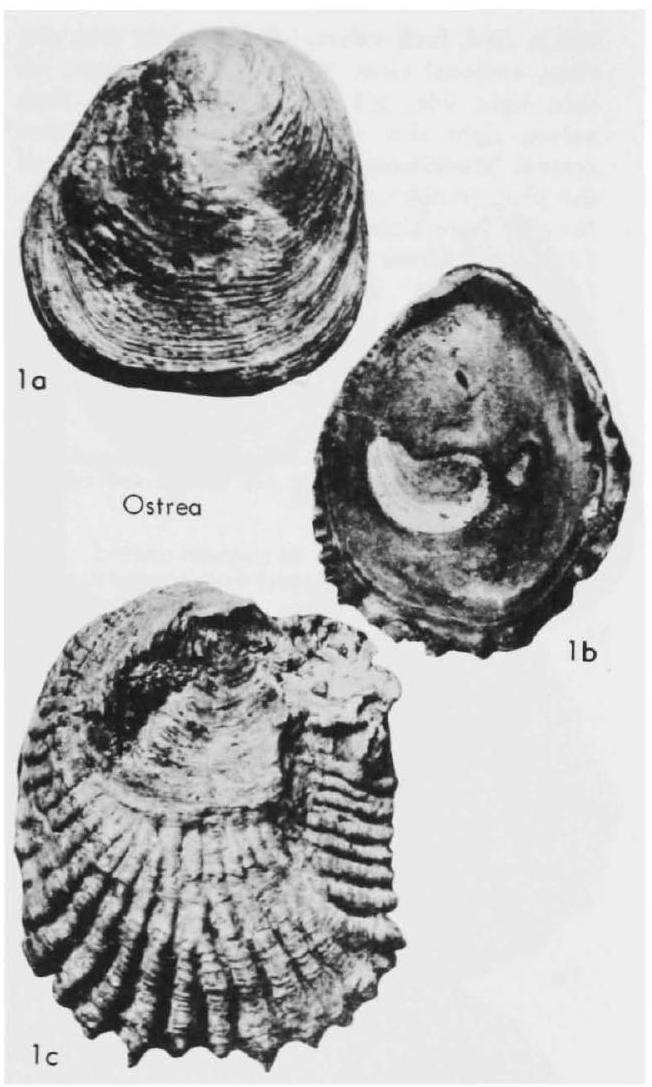
Ostrea
Classification
Phylum:
Mollusca
Class:
None
Subclass:
Pteriomorphia
Order:
Pterioida
Suborder:
Ostreina (oysters)
Superfamily:
Ostreacea
Family:
Ostreidae
Subfamily:
Ostreinae - Incubatory genera
Formal Genus Name and Reference:
Ostrea LINNÉ, 1758, p. 696 [Official List, ICZN Opin. 94 and 356]
Type Species:
O. edulis; SD ICZN, Opin. 94]
Images
(Click to enlarge in a new window)
Synonyms
Ostracites, Ostreum, Peloris, Ostracites, Peloriderma, Ostracarius, Ostreigenus, Ostraea, Peloridoderma, Ostreites, Ostreola, Cymbulostrea, Ostrea (Eostrea), Ostrea (section Anodontostrea), Ostrea (Euostrea), Monoeciostrea, Ostroea, Osrea, Monoeciostraea, Ostrea (Ostrea) section Bellostrea
Geographic Distribution
worldwide except in polar regions.
Age Range
Beginning Stage in Treatise Usage:
Cret.
Beginning International Stage:
Berriasian
Fraction Up In Beginning Stage:
0
Beginning Date:
143.1
Ending Stage in Treatise Usage:
Rec.
Ending International Stage:
Meghalayan
Fraction Up In Ending Stage:
100
Ending Date:
0
Description
Medium-sized to large (to 18 em. high and 20 em. long), variable outline, but average shells tending to be roughly orbicular with hardly prominent umbones obtusely pointed and Banked by small to very large auricles or lacking them, posterior auricle, if present, much larger than anterior one. Width about 0.25 of height, resulting in rather Bat shell. RV Bat to gently convex, covered by many fragile Battish conchiolinous growth squamae, peripheral conchiolin fringe extensive (up to 1.5 em. wide), so that calcareous part of RV is much smaller than that of corresponding LV, as conspicuous as in some fossil bivalved specimens. Concentric undulations absent or present, never conspicuous on RV. LV slightly convex, hardly ever deeply cupped, covered by many long unequal rounded radial ribs interrupted by freestanding frilled delicate growth squamae less abundant than those on RV; some concentric undulations present. Although radial rib patterns differ much from species to species, no hyote spines are developed on them. Ligamental areas commonly longer than high, forming triangles of long base lines. Chomata always present, but differing in prominence from species to species, few (4 or 5) in some, inconspicuous and tuberculiform (see Fig. JIB), abundant and conspicuous in others, forming elongate ridgelets (see Fig. J31) arranged all around periphery. Adductor-muscle imprint reniform; both ends well rounded, with length about 4 times height; more centrally located than in other genera. LV mostly without umbonal cavity. Typical species tend to have large round flat shells with flat commissures, whereas others have small vertically elongate shells with twisted or irregularly plicate commissure. [Genus is incubatory. Diagnostic features are outline and position of adductor muscle, chomata, Hattish shape of shell, absence of umbonal cavity, and different ornamentation of opposing valves.) [Thne is some confusion concerning the type species of Anodontostua SUTER., 1917. SUTEIl was under the impres· sian that the New Zealand oyster's name: was Ostrea angasi $oWERBY (recte angassi). which he listed as the first species under Anodontostrea. It now appears (HOLLIS, 1963, p. 2·8) that name: rather refers to the: closely similar 50mh Australian oyster, whneas the: New Zealand oyster is to be called O. lutraria HUTTON, 1873.]
References
Museum or Author Information
Classification
Phylum:
Mollusca
Class:
None
Subclass:
Pteriomorphia
Order:
Pterioida
Suborder:
Ostreina (oysters)
Superfamily:
Ostreacea
Family:
Ostreidae
Subfamily:
Ostreinae - Incubatory genera
Formal Genus Name and Reference:
Ostrea LINNÉ, 1758, p. 696 [Official List, ICZN Opin. 94 and 356]
Type Species:
O. edulis; SD ICZN, Opin. 94]
Images
(Click to enlarge in a new window) Synonyms
Ostracites, Ostreum, Peloris, Ostracites, Peloriderma, Ostracarius, Ostreigenus, Ostraea, Peloridoderma, Ostreites, Ostreola, Cymbulostrea, Ostrea (Eostrea), Ostrea (section Anodontostrea), Ostrea (Euostrea), Monoeciostrea, Ostroea, Osrea, Monoeciostraea, Ostrea (Ostrea) section Bellostrea
Geographic Distribution
worldwide except in polar regions.
Age Range
Beginning Stage in Treatise Usage:
Cret.
Beginning International Stage:
Berriasian
Fraction Up In Beginning Stage:
0
Beginning Date:
143.1
Ending Stage in Treatise Usage:
Rec.
Ending International Stage:
Meghalayan
Fraction Up In Ending Stage:
100
Ending Date:
0
Description
Medium-sized to large (to 18 em. high and 20 em. long), variable outline, but average shells tending to be roughly orbicular with hardly prominent umbones obtusely pointed and Banked by small to very large auricles or lacking them, posterior auricle, if present, much larger than anterior one. Width about 0.25 of height, resulting in rather Bat shell. RV Bat to gently convex, covered by many fragile Battish conchiolinous growth squamae, peripheral conchiolin fringe extensive (up to 1.5 em. wide), so that calcareous part of RV is much smaller than that of corresponding LV, as conspicuous as in some fossil bivalved specimens. Concentric undulations absent or present, never conspicuous on RV. LV slightly convex, hardly ever deeply cupped, covered by many long unequal rounded radial ribs interrupted by freestanding frilled delicate growth squamae less abundant than those on RV; some concentric undulations present. Although radial rib patterns differ much from species to species, no hyote spines are developed on them. Ligamental areas commonly longer than high, forming triangles of long base lines. Chomata always present, but differing in prominence from species to species, few (4 or 5) in some, inconspicuous and tuberculiform (see Fig. JIB), abundant and conspicuous in others, forming elongate ridgelets (see Fig. J31) arranged all around periphery. Adductor-muscle imprint reniform; both ends well rounded, with length about 4 times height; more centrally located than in other genera. LV mostly without umbonal cavity. Typical species tend to have large round flat shells with flat commissures, whereas others have small vertically elongate shells with twisted or irregularly plicate commissure. [Genus is incubatory. Diagnostic features are outline and position of adductor muscle, chomata, Hattish shape of shell, absence of umbonal cavity, and different ornamentation of opposing valves.) [Thne is some confusion concerning the type species of Anodontostua SUTER., 1917. SUTEIl was under the impres· sian that the New Zealand oyster's name: was Ostrea angasi $oWERBY (recte angassi). which he listed as the first species under Anodontostrea. It now appears (HOLLIS, 1963, p. 2·8) that name: rather refers to the: closely similar 50mh Australian oyster, whneas the: New Zealand oyster is to be called O. lutraria HUTTON, 1873.]